Koraput Arabica Naturals
Forest-grown, sun-dried Arabica from Odisha tribal smallholders — dark berry, wine-like body.
Odisha · East India
Elevation
900–1,350m
Varieties
Chandragiri, S795, local heirlooms
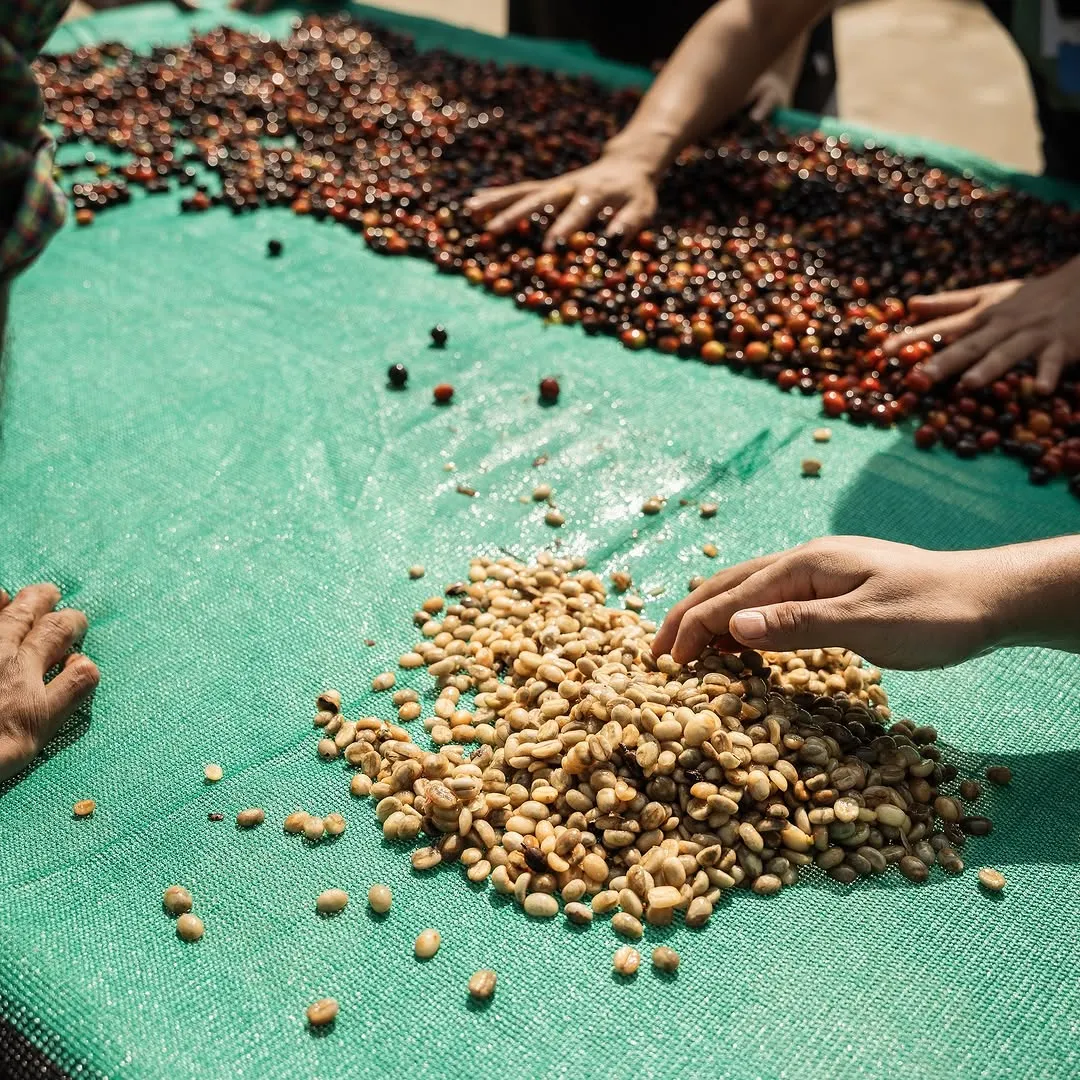
Koraput sits at the southern tip of Odisha, where the Eastern Ghats fold into a series of elevated plateaus and forested ridges. Coffee has grown here since the 1950s as a tribal welfare crop, planted under a native forest canopy alongside pepper vines and silver oak rather than on cleared plantation land. Farmers from the Kondh, Gadaba, and Poraja communities tend small holdings of half an acre to two acres, most without access to synthetic fertiliser or irrigation.
That constraint shaped the region's processing style. Natural (sun-dried) is the dominant method — cherries are spread on raised bamboo beds and turned by hand for three to five weeks, since running water for washing stations is scarce in many farm clusters. The result is a heavy-bodied, fruit-forward cup with dark berry and wine-like notes that reads distinctly different from South Indian washed Arabica.
A smaller volume is processed as Honey Sun-Dried (mucilage left on the parchment during drying) and fully washed, both of which trade at a premium for their cleaner, brighter cup profile. Because farms are small and scattered, lots are aggregated at a village level before micro-milling — so traceability runs to district and cooperative, not always to a single farm.
Request samples, pricing, and MOQs atbulkgreencoffee.com, or email office@graycup.org.